
PRISM Neurofeedback at Avant
Practice skills to help regulate your brain’s response to stress and trauma.
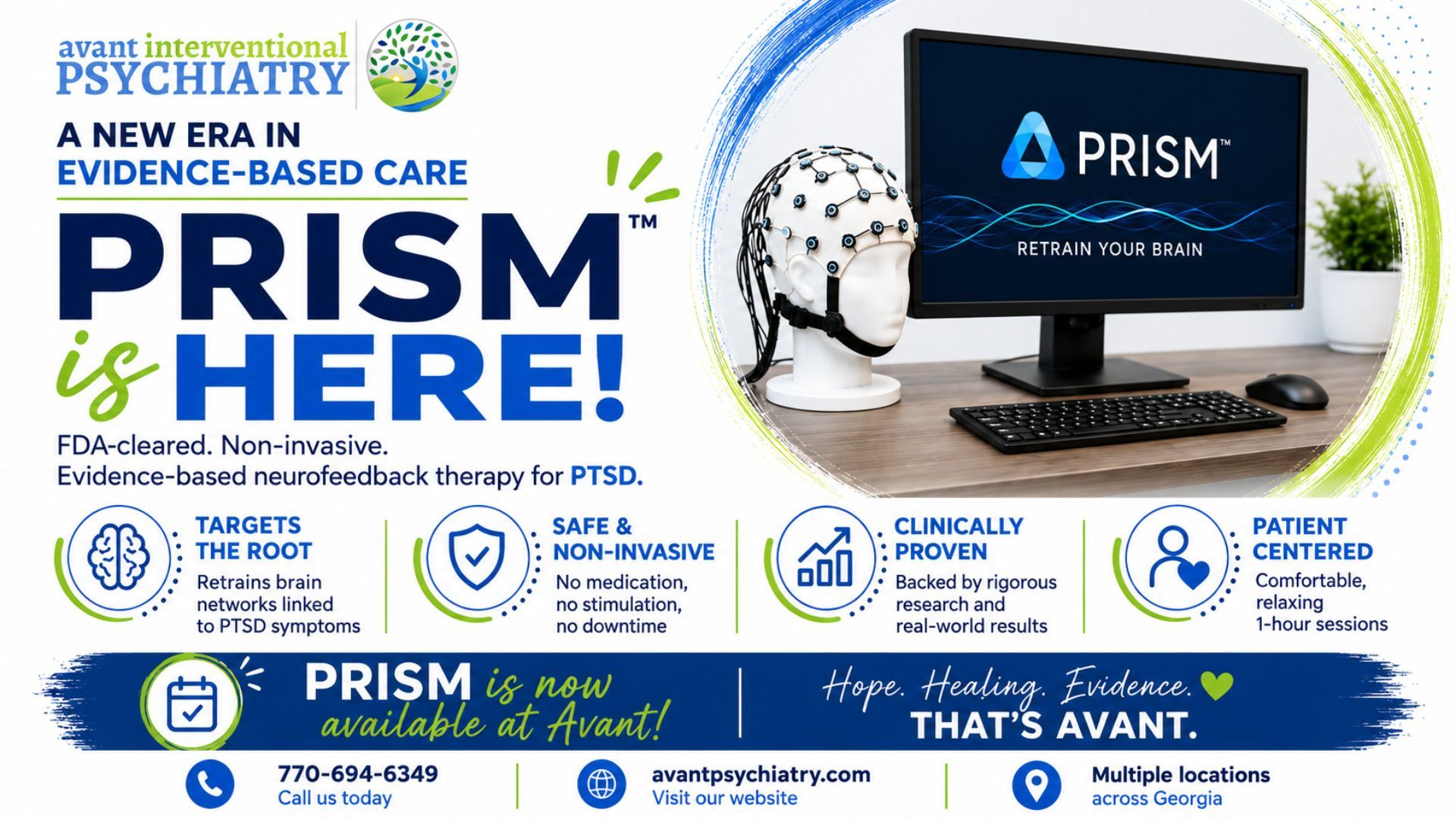
Living with PTSD can make it difficult to feel settled, even when you are safe. PRISM offers a technology-assisted approach that helps you practice regulating brain activity through feedback on a computer screen.
At Avant, a consultation can help determine whether PRISM may be appropriate alongside your existing care.


How Does It Work?
PRISM uses technology developed from EEG and functional MRI research to provide feedback related to brain activity involved in emotional regulation.
You practice mental strategies, such as imagining a calming experience, while observing the simulation. The aim is to identify strategies that help you influence the feedback and build a skill you can practice beyond the session. You do not need an MRI scan during treatment.
What Makes PRISM Different?
PRISM involves active participation: you practice mental strategies and observe the feedback. It does not involve medication administration or delivering magnetic pulses.
The PTSD sessions do not require you to retell or deliberately relive your traumatic experience. PRISM is designed to complement your care rather than automatically replace medication or therapy.
Who May Be a Candidate?
A provider can assess whether PRISM is appropriate for your PTSD symptoms, treatment history, and ability to participate in repeated training sessions.
During your consultation, we’ll discuss your goals, the treatment process, and other available options.

What to Expect
1. Evaluation
Your provider will review your symptoms and current treatment and discuss whether PRISM fits your care plan.
2. Setup
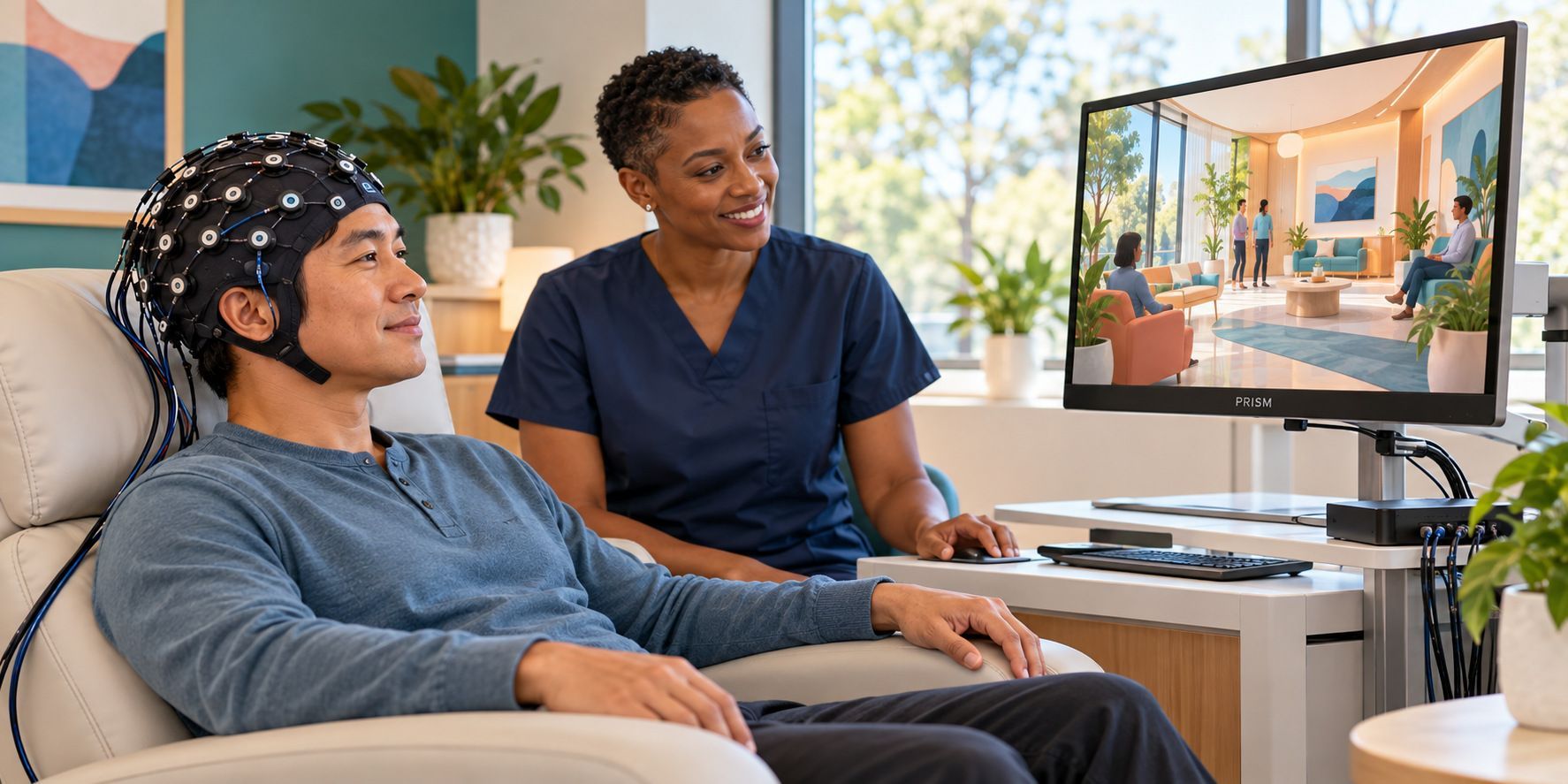
A trained team member will position the EEG cap and explain the computer simulation.
3. Guided practice
You will try personal mental strategies while watching how the simulation responds. Staff will guide you through the process.
4. Repeated sessions and follow-up
PRISM involves a series of visits. Your provider will explain the schedule and review your progress over time.
Treatment Experience and Results
PRISM does not require surgery or anesthesia. Headache and fatigue have been reported. Tell your care team about discomfort or changes in symptoms.
Results vary, and improvement is not guaranteed. Your provider will help assess your response and determine the next steps.
Frequently Asked Questions
Will I have to discuss my trauma during each session?
The training does not require detailed retelling or deliberate re-exposure to your trauma. Your initial evaluation will still include relevant clinical history.
Does the cap stimulate my brain?
The EEG sensors record activity. They do not deliver magnetic stimulation like TMS.
How many visits will I need?
Treatment involves multiple sessions. Our team will explain the recommended number, frequency, and appointment length before you begin.
Should I continue my current treatment?
Follow your provider’s instructions. PRISM may be used alongside medication, therapy, or other recommended care.
Is PRISM covered by insurance?
Coverage varies. Contact Avant to discuss available payment options and whether benefits may apply.

Learn More About PRISM
Contact Avant to discuss whether PRISM may be an appropriate addition to your PTSD treatment plan.

Request a PRISM Consultation
Interested in learning more about TMS Therapy, Spravato, or PRISM? Complete the form below, and our team will contact you to discuss the consultation process. You do not need to choose a treatment before reaching out.
PRISM Form
VISIT US ANYTIME
Phone:
770-694-6349
Email:
Info@avantpsychiatry.com
Business Hours:
- Mon - Fri
- -
- Sat - Sun
- Closed
Locations:
Austell, Fayetteville, and Marietta, GA