The Connection Between the Gut and Mental Health

July 16, 2021

Your Gut and Mental Health

Your gut houses trillions of bacterial cells of about 500 to 1,000 different species. Believe it or not, this bacteria can actually help with symptoms of stress, anxiety, and depression or make it worse. So, let's take a look at how this works.


Have you ever had a gut feeling or butterflies flurrying in your tummy?


Well, these sensations you feel in your belly actually suggest that your gut and brain are connected.


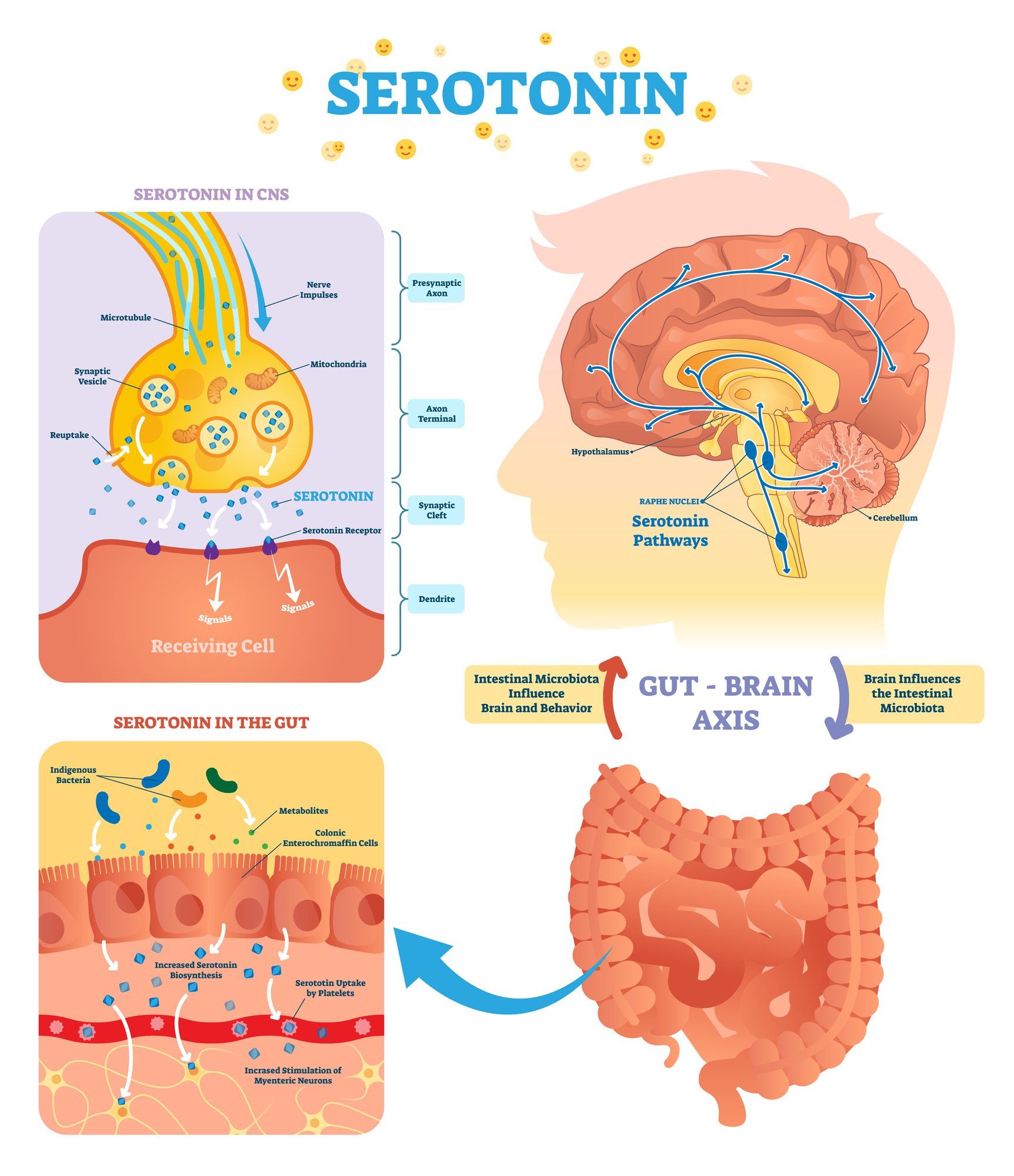
To confirm, many studies show that your brain does affect your gut health and vice versa.  This is referred to as your gut-brain axis, which is the communication network that connects your gut to your brain.

Your Nervous System


Neurons are fundamental units of the brain and central nervous system. Their role is to tell our body how to behave. Neurons are essentially responsible for receiving information from the world around you, sending commands to your muscles, and transforming and relaying electrical signals.


Do you know which nerve is the largest one in your body. That's right, the vagus nerve.


Interestingly enough, it connects the gut to the brain and sends signals in both directions. The vagus nerve has a lot of responsibility, including the regulation of bodily organs. In fact, by stimulating the vagus nerve, you can send a message to your body to relax, calm yourself, and de-stress your mind and body. Poor mental health, such as stress, depression, and anxiety are symptoms of a poorly regulated nervous system. This occurs as our response to environmental stressors (i.e., trauma, etc.) either becomes excessive (causing fear, anxiety, nervousness, or panic attacks) or down-regulated (causing depression, sadness, apathy, etc.). This equates to poor vagus nerve function.  So, it makes sense, that by increasing your vagal tone, it provides an opportunity to assist you with overcoming stress, anxiety, and a depressed mood.


Neurotransmitters


Neurotransmitters also connect the gut to the brain. Neurotransmitters are technically chemical substances that are produced specifically to transmit messages between neurons (i.e. chemical messengers). For example, some of the major neurotransmitters include, acetylcholine, dopamine, gamma-aminobutyric acid (GABA), glutamate, histamine, norepinephrine, and serotonin.


Norepinephrine is a stress hormone released into the blood that functions as a neurotransmitter in the central nervous system. Reduced neurotransmission of norepinephrine can result in low energy levels, difficulties with attention and concentration, lessened alertness, and a decreased cognitive ability.


While serotonin is produced in the brain where it performs its primary function, nearly 90% of it is found in the gut (digestive tract) and in blood platelets. From the near 40 million brain cells, most of them are influenced in either directly or indirectly from serotonin. These include brain cells that are related to mood, appetite, sleep, sexual function, memory and learning, and social behavior. This explains why research indicates that low levels of serotonin are attributed to many of the symptoms of depression and anxiety, and even obsessive compulsive disorder (OCD).


The Connection between the Gut and Mental Health


When we consider what we've learned about the connection between the brain and the gut, we can understand how serotonin and digestion work hand in hand. Our entire well-being is centered around the gut!  When the levels of serotonin are insufficient in the gut, you will likely experience both physical and mental symptoms. Physically, you may have diarrhea or constipation, bloating, or cramping. Mentally, you may experience sleeping problems and symptoms associated with depression and anxiety.


Eating a healthy, well-balanced diet, rich in veggies and fiber can help maintain sufficient serotonin levels. So stock up on a variety of vegetable, fruits, fish, lean meats, whole grains, and complex carbohydrates. And, be sure to cut way back on processed foods, fast food, refined sugars and carbohydrates, and minimize your caffeine and alcohol intake.

By Raquel Harvey, BSN, RN, PMHNP Student December 8, 2025
September is National Recovery Month. During this time several efforts are made to raise awareness about substance use disorders. The importance of treatment, recovery, and community support is highlighted. For many families, watching a loved one struggle with alcohol use disorder (AUD) can feel overwhelming. Recovery is a journey that involves the person with the disorder as well as the family. Recovery does not happen overnight; it is an ongoing process that may involve therapy, medications, support groups, and lifestyle changes. Family members play a vital role in creating a safe and encouraging environment that fosters sustained recovery. Supporting your loved one can provide short- and long-term sobriety. Let’s talk about some ways families can support a loved one recovering from AUD while also taking care of themselves.
By Henok Hayes, BSN, RN; PMHMP-S December 8, 2025
Currently more Americans die every year from drug overdoses than in motor vehicle crashes. This crisis is taking a devastating toll on certain parts of the U.S., such as Philadelphia, San Francisco, and Baltimore (Substance Abuse and Mental Health Services Administration, 2021a ).
By Shanila Huerta, Morehouse School of Medicine PA-S December 1, 2025
Ahh yes...fall. Pumpkin spice season, leaves changing colors, halloween around the corner, and days getting shorter!!
By Aksh Chhabra, Morehouse School of Medicine PA-S December 1, 2025
Many individuals tend to notice shifts in their mood, energy and motivation as days grow shorter, and sunlight fades earlier in the day. Seasonal Affective Disorder (SAD) is a form of depression linked to changes in daylight exposure. According to the National Institute of Mental Health (NIMH), SAD affects 5% of adults in the US each year. Symptoms typically begin in the fall and last throughout the winter months. There are proactive steps you can take now to mentally prepare for the season change. This blog explores what SAD is, why it happens and how you can protect your mental health during the darker months.
By Alysia Campbell, BSN, RN, PMHNP Student November 24, 2025
Seasonal changes, whether moving from winter to spring or summer to fall, affect more than just the weather. For many people, these transitions influence mood, energy, and overall mental wellness. Some may notice changes in sleep, appetite, motivation, or irritability. For those with underlying mood disorders or seasonal affective disorders (SAD), these shifts can feel challenging. By understanding the biological, environmental, and social elements involved, people can develop resilience and even flourish amid these changes. Resilience is not about avoiding stress, it’s about learning to navigate change with flexibility, self-awareness, and proactive strategies. And while seasonal changes often refer to shifts in environment, they can also represent the seasons of life where the highs and lows shape us. These seasons serve as a reminder that change is frequently necessary for growth.
By Rachael Colver, BSN, RN, PMH-BC, and PMHNP Student November 24, 2025
October is recognized as ADHD Awareness Month, a time to highlight the realities of Attention-Deficit/Hyperactivity Disorder, reduce stigma, and share practical strategies that support those living with it. ADHD is a neurodevelopmental condition that affects millions of children and adults worldwide, but it is still widely misunderstood. For many, ADHD is thought of as simply being overly energetic or easily distracted. However, ADHD is far more complex, involving brain-based differences in attention, impulse control, and regulation of activity. Raising awareness is important because with proper understanding, treatment, and support, people with ADHD can thrive in school, work, relationships, and beyond.
By Joyce W. Kinuthia, BSN, RN, PMHNP-Student November 17, 2025
National and international health guidance agencies have placed high emphasis on the critical need to mitigate Social Isolation among older adults. The 2023 Surgeon General’s Advisory declared social disconnection a national health crisis. The World Health Organization(WHO) has called loneliness “a significant determinant of mental health in older age”, rating social isolation and loneliness among older adults a public health priority. The CDC has similarly spotlighted “Social connection” among older adults as a determinant of health that impacts both a person’s mental and physical health. CDC further stated that social isolation increases the risk of premature death from all causes. The National Institute on Aging similarly stated that social isolation may accelerate mental aging and worsen psychiatric vulnerability
By Myesha Hunt, PMHNP-S November 17, 2025
If there’s one thing nursing has taught me, it’s that anxiety has a way of stealing people’s breath. I’ve sat with patients who whispered, “I can’t breathe” while their oxygen levels were perfectly fine. What they were really describing was the tight grip of panic. That stuck with me. Because even before I began my journey to become a Psychiatric Mental Health Nurse Practitioner (PMHNP), I understood how scary that feeling is. Anxiety makes the body feel unsafe, even when you are safe. And often, the breath is the first place it shows up.
By Caleb Findley, BS; Philadelphia College of Osteopathic Medicine November 10, 2025
As fall approaches, many people often feel a downregulated or depressed mood. Your circadian rhythm is responsible for releasing various brain chemicals that help control your alertness and mood.
By Ana Beck, B.A., MSW Student, Relationship Coach specializing in Trauma-Informed Care November 10, 2025
As the days grow shorter and nights come earlier, many people notice changes in their mood and energy levels. At the start of fall, some may feel worsening or the beginning of depressive symptoms without apparent environmental or pharmacological changes.